Lessons from Building High-Performance Digital Platforms at Emirates — and Why They Matter Again
In 2019, the business posed a very clear challenge to us:
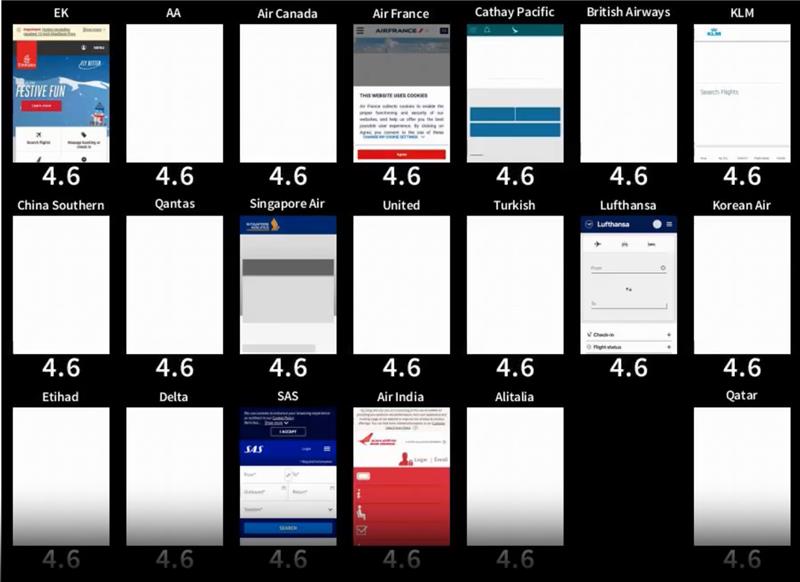
Make the Emirates Airline landing page the fastest in the airline industry.
At the time, this wasn’t framed as a “technical improvement.” It was a business-critical initiative driven by customer expectations, mobile-first usage, and the direct relationship between speed, trust, and conversion.
I was part of the technical team responsible for executing this transformation, including running performance sprints and hackathons, and working closely with cross-functional teams.
The outcome of that work is captured publicly in this post by Alexander Knigge, Emirates’ Chief Digital & Technology Officer, where emirates.com became one of the fastest airline websites globally:
What’s more interesting to me today is not just what we achieved but how we approached the problem, and why the same principles are now even more relevant as we move from traditional websites to agentic platforms powered by GPTs and AI workflows.
How We Approached Web Performance at Airline Scale
This was not a single optimization exercise. It was a deliberate engineering and business discipline.


Deep Collaboration with Technology Vendor
We ran multiple working sessions with Google, focusing on:
- ReactJS hydration problem —not an issue now
- Real User Metrics (not just lab scores)
- Mobile network realities (3G / 4G)
- Browser behavior and rendering paths at scale
This helped ground performance decisions in actual customer experience, not theoretical benchmarks.
Dedicated Performance Sprints
As a technical team, we ran focused performance sprints, treating speed as a first-class feature.
Performance work was prioritised alongside functional delivery—not postponed “until later.”
Hackathons with a Single Goal: Speed
We also ran hackathons explicitly focused on performance. These were not feature hackathons.
The goal was simple:
Remove anything that does not directly contribute to the first meaningful user experience.
That meant aggressively questioning existing assumptions.
Ruthless Resource-Level Reviews
One of the most impactful practices was reviewing every resource loaded on the landing page:
- JavaScript bundles
- Third-party tags
- Fonts
- Images
- Tracking scripts
For each one, we asked:
- Does this need to load on first paint?
- Can this be deferred or removed?
- Is the business value worth the latency cost?
Performance became a shared responsibility across engineering, design, and marketing.
The Outcome — and the Real Lesson
The result was a materially faster landing page and measurable improvements in customer experience.
But the bigger takeaway was this:
Performance is not a metric. It’s a mindset.
And that mindset is exactly what’s missing in many modern AI and agentic platforms today.
The Shift: From Websites to Agentic Platforms
Fast forward to now.
Users are no longer starting their journeys on landing pages alone. Increasingly, experiences begin inside agentic systems:
- GPT-powered chat interfaces
- Conversational shopping assistants
- AI agents that search, compare, recommend, and transact on a user’s behalf

A good example is the shopping experience inside ChatGPT, where users express intent (“Find the best carry-on luggage for long-haul flights”) and the agent:
- Clarifies intent
- Retrieves context
- Calls tools
- Compares options
- Presents recommendations
- Initiates checkout
There is no page load anymore.
But performance still determines success.
Performance Hasn’t gone Away — It Has Moved
In agentic systems, performance is no longer about: • DOM load time • Render blocking scripts • Lighthouse scores
It is now about: • Time to first useful response • Latency across tool and API calls • Context retrieval speed • Accuracy and trustworthiness • Cost per successful task • Consistency across sessions
Just as slow landing pages killed conversion in 2019, slow, unreliable, or confusing agents will kill adoption today.
From Web Performance Thinking to Agentic Performance Thinking
| Web Performance (Then) | Agentic Performance (Now) |
| Page Load Time | Time to First Meaningful Answer |
| JS Bundle Size | Tool Invocation Latency |
| Image Optimization | Context Retrieval Speed |
| Third-Party Tags | External API Reliability |
| Bounce Rate | Goal Completion Rate |
| Conversion Rate | Successful Task Execution |
| Lighthouse Score | Agent Evaluation Score |
The metrics have changed. The engineering discipline has not.
Tools I’d Recommend for Agentic Performance

credit: https://dt-cdn.net/images/2-service-dashboard-3840-c19987541f.png

| Agent Development & Orchestration | Observability (The New “Resource Review”) |
| LangChain / LlamaIndex – GPT orchestration with memory and tools | LangSmith – Full trace of agent reasoning and tool calls |
| AutoGen / CrewAI – Multi-agent workflows | Langfuse / Helicone / Portkey – Prompt logging, latency, and cost tracking |
| Vector Databases (Pinecone, Weaviate, Chroma,qdrant ) – Fast, scoped context retrieval | Phoenix (Arize) – Evaluation and observability for LLM systems |
| Evaluation & Quality AgentBench / EvalGPT / HELM • Track: ◦ Goal success rate ◦ Hallucination rate ◦ Workflow adherence ◦ Cost per successful outcome |
If we reviewed every JS file in 2019, we must now review:
- Every prompt
- Every tool call
- Every API dependency
What I’d Do Again (and Recommend Today)
Looking back at the Emirates experience, the same principles apply:
- Make performance a product concern
- Run agent performance sprints
- Instrument everything early
- Continuously review what your agent “loads”
- Optimize for user intent, not just speed
Final Thought
In 2019, we proved that performance engineering could be a competitive advantage at airline scale. Today, the surface has changed—but the lesson hasn’t. The landing page is gone.
The agent is the experience. And once again, the fastest, most reliable experience will win.
This site performance 🙂
